
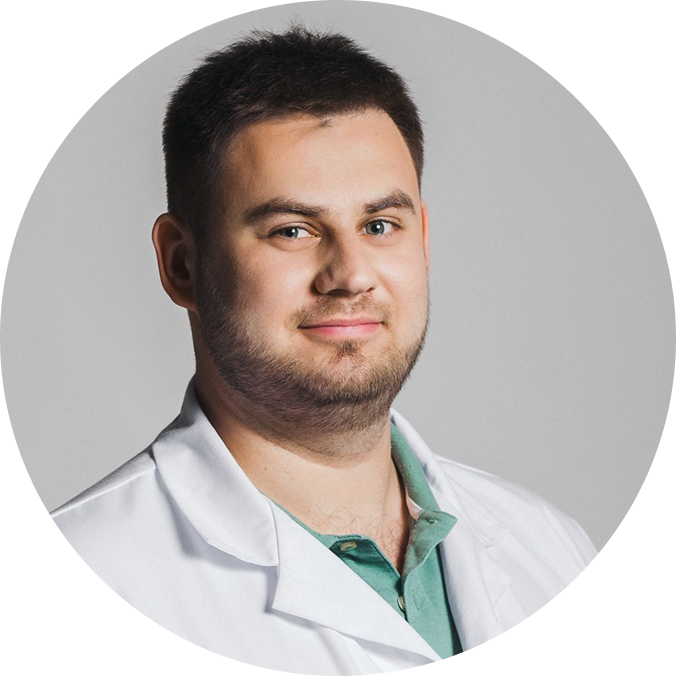
Dr. Artjoms TUPĪTS

Oral and maxillofacial surgery


Contacts

About maxillofacial surgery

Oral and maxillofacial surgery is a branch of medicine that deals with acute and chronic conditions in the facial-jaw region. Surgeons provide emergency medical care, treating patients with various craniofacial injuries, facial bone fractures, and inflammatory processes in the face and jaw area, as well as performing planned treatments.
Planned procedures include both simpler and more complex surgeries such as surgical removal of skin formations, reconstructive surgeries after trauma or oncological diseases in the head and neck region, cosmetic facial and neck surgeries (forehead, face and neck lift, upper and lower eyelid correction, rhinoplasty), conservative and surgical treatment of jaw joint disorders, as well as oral cavity surgeries including bone augmentation and dental implant procedures.

Education

• Dentist’s diploma (DDS), Riga Stradiņš University
• Medical doctor’s diploma (MD), Riga Stradiņš University
• Faculty of Postgraduate Education – Oral and Maxillofacial Surgeon

Member of the Baltic Association of Oral, Maxillofacial and Plastic Surgeons, member of the Latvian Association of Oral and Maxillofacial Surgeons, member of the European Craniofacial Association, and member of AO Association. Regularly participates in various international and Latvian conferences, clinical courses, and seminars.

I provide emergency and planned care for patients with conditions in the maxillofacial region. Work priorities include maxillofacial traumatology, plastic surgeries, functional and aesthetic nasal surgeries, implantology, bone transplantation procedures, and surgical treatment of skin formations.

Services

Oral surgery and implantology

• Implantation
• Bone augmentation surgeries
• Tooth extractions of any complexity
• Removal of formations from the oral mucosa

Oral and maxillofacial surgery

Oncological diseases:
• Malignant skin tumors
• Oncology in the facial-jaw region


Salivary gland diseases

Removal of jaw formations (cysts, malformations, etc.)

Diagnosis and treatment of temporomandibular joint disorders
Joint lavage / medication administration.


Emergency care for patients with facial injuries
• Facial skeletal injuries (fractures of the orbit, cheekbone, nasal bone, lower jaw, upper jaw, and forehead bone)
• Soft tissue injuries of the face.
• Reconstructive surgeries for patients after trauma


Removal of skin lesions


Rhinoseptoplasty
• Nose shape improvement surgeries
• Nasal breathing improvement surgeries


Plastic surgery
• Facial contouring
• Chin correction
• Upper / lower eyelid surgery (blepharoplasty)


Liposuction / lipofilling


Scar correction


Ear shape correction

How to act in acute cases?

Where to go to receive emergency care?

Rēzekne Hospital (admission department) provides 24/7 emergency care for patients with facial trauma and inflammatory conditions. Note: dental (stomatological) emergency care is not provided here.

PSKUS (00–24) facial-jaw trauma center
Riga, Pilsoņu Street 13, Building B1, Room 22

RSU Institute of Stomatology (weekdays 8–20, Saturday 8–16) Acute oral surgery
Riga, Dzirciema Street 20

To prepare for general anesthesia.

• If the surgery is under general anesthesia, do not eat from the previous evening, and do not drink anything 5 hours before anesthesia.

• Blood tests are required.

• Chest X-ray and electrocardiogram (ECG) are necessary.

• An anesthesiologist consultation is mandatory.

Before surgery, it is important to take into account the following and bring these items with you:

1. Identification document

2. Referral from your family doctor specifying chronic illnesses, other health problems, and current medications

3. An anesthesiologist's diagnosis obtained 7-14 days before the scheduled surgery. For the consultation, bring all test results you have

4. Insurance policy, if available (check carefully whether it covers your surgery)

5. Necessary clinical test results (originals or copies with the date of the test) including:
• Previously performed X-rays, ultrasounds, CT scans, MRIs, and reports (if available)
• Tests:
— Blood group and Rh factor
— Complete blood count and platelet count
— Urinalysis
— Prothrombin index, APTT
— Blood biochemistry (bilirubin, ALAT, ASAT, creatinine, CRP, blood glucose level)
— ECG
— Chest X-ray (valid for 1 year)
— COVID-19 test (valid for 48 hours)


***Important: If you take any blood-thinning medication, inform your doctor. The doctor will decide together with you whether to stop taking it before surgery or switch to another medication. These preparations are crucial for ensuring a safe and successful surgical procedure. The anesthesiologist will evaluate your health condition and risk factors during the preoperative consultation, adjust anesthesia planning accordingly, and give you necessary instructions based on your medical history and test results.